
Editor Kate Dulohery
Welcome to the November issue of Anastomosis. In this issue, we bring you the latest news from our members and from the Journal of Anatomy and Aging Cell.
If you have any news, events or announcements that you would like to see published in the newsletter, please send us an email by the 20th of each month. Items should reach the editor a minimum of 30 days before the date that the event is scheduled to take place.
Please remember that you can visit our News Page at any time for the very latest news.
Upcoming Conference - Anatomical Society Winter Meeting
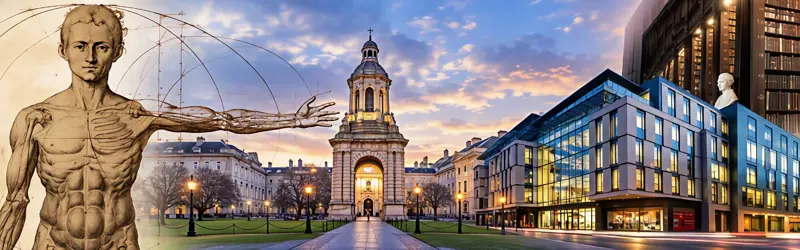
We are looking forward to welcoming you to our upcoming Winter Meeting in Dublin which will take place between 14th-16th December 2026, at the Trinity Biomedical Sciences Institute, Pearse Street D02R590, and at the Anatomy Building D02PN40, Trinity College Dublin, Dublin, Ireland. The theme of the meeting is 'Skin and Bone'. Invited lectures from leading clinicians / researchers will highlight the translational relevance of tissue engineering and surgery. The meeting will also include satellite workshops focused on the growing need for dialog around anatomy collections and their legacy, and the role of virtual dissection and AI in contemporary medical education. #AnatSoc #AnatSocWinter26
Upcoming Annual Council Elections and the Annual General Meeting of the Anatomical Society
The Anatomical Society would like to remind you of the upcoming annual elections to the Council of the Anatomical Society. We have now received nominations from our members and a ballot has been sent to all members.
The Ballot paper and instructions on how to complete it can be found here.
Please note the deadline for return of completed ballot forms is 17:00 GMT on Tuesday 8th December 2026.
Subsequently, the Annual General Meeting of the Anatomical Society will be held at 1.15pm to 2.30pm on Tuesday 15th December 2026, Tercentenary Lecture Hall, Trinity Biomedical Sciences Institute, 152-160 Pearse Street
Trinity College Dublin, Dublin 2, Ireland D02R590, during the Anatomical Society Winter Meeting.
Anatomy Research Developmental Awards
The Anatomical Society Council would like to remind our members about our 'Anatomy Research Development Award' aimed at researchers in the early stages of their academic careers. Applications are currently being invited from eligible researchers to commence in 2027. The closing date for applications is midnight 31st December 2026. For more information see: Anatomy Research Development Award
We would also like to highlight the project summary for a previous recipient, Dr Norah Fogarty, Centre for Gene Therapy and Regenerative Medicine, Guy's Hospital, Kings College London. For the project titled ‘Investigation of effects of folate-depletion on human trophoblast stem cell regulation’ Project Resume and Final Project Summary
Memorandum of Understanding between The Anatomical Society (AS) and The Anatomische Gesellschaft (AG)
Collaboration between The Anatomical Society and The Anatomische Gesellschaft.
Following the signing of the inaugural Memorandum of Understanding (MoU) between The Anatomical Society and The Anatomische Gesellschaft, in September 2020 we are delighted to announce the signing of a new Memorandum of Understanding (MoU) between The Anatomical Society and The Anatomische Gesellschaft, in November 2026.
This agreement represents our two organisations continuing to collaborate in order to promote anatomy and scientific discourse through the encouragement of reciprocal attendance by each other’s members at our Scientific meetings, Symposia and Joint AS/AG Scientific meetings (at member's rates).
A joint AS/AG scientific meeting will continue to be held every two years. Following the successful 2026 Anatomical Society symposium at the AG meeting in Bielefeld, the Anatomical Society will host the AG as a meeting in 2028, followed by a meeting hosted by The Anatomische Gesellschaft in 2030.
We are looking forward to our continuing joint venture and welcoming members to participate in this exciting journey.
Professor Abigail Tucker, President, AS and Professor Matthias Ochs, President, AG
9th November 2026
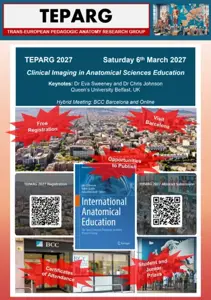
TEPARG 2027 Barcelona Saturday March 06, 2027: Call for Registration and Abstracts
TEPARG 2027 will take place on 6th March 2027, in Barcelona, Spain. Calls for abstracts and registration are now open.
Education Committee - Tip of the Month
How can evolution help students understand modern human anatomy?
Thomas Van Parys, Department of Physiology, Development and Neuroscience, University of Cambridge
“Nothing makes sense in biology except in the light of evolution”. Theodore Dobzhansky’s famous statement is particularly relevant to human anatomy: the product of millions of years of evolutionary history in which structures have been modified, repurposed, and constrained. Hominin evolution has produced distinctive anatomical features, including large brains and obligate bipedalism, alongside the behavioural and cultural capacities that characterise our species, such as language and tool use. Yet, human anatomy is often taught with limited reference to its evolutionary origins. This reflects a divide between proximate and ultimate explanations. Medical anatomy principally asks how as structure develops, functions, and becomes disrupted by disease. Evolutionary anatomy asks why such forms occurs. Rather than separated learning frameworks, could integrating proximate and ultimate explanations provide students with a more coherent understanding of human anatomy?
Consider a medical student encountering the recurrent laryngeal nerve in the dissection room. Why does a nerve supplying the larynx branch from the vagus nerve, descend into the thorax, loop around a major artery, and ascend toward the neck? Its apparently convoluted route is difficult to appreciate from adult anatomy alone. Embryology explains how this arrangement develops through remodelling of the aortic arches; evolution explains why developmental systems inherited from our vertebrate ancestors can constrain subsequent anatomical change.
This evolutionary perspective illuminates anatomical variation, which is routinely encountered in the dissection room. Variation in skeletal and soft-tissue anatomy occurs between individuals, populations, and geographic groups. Some variants reflect developmental processes; others may represent retained ancestral characteristics or a population-level evolutionary history. This perspective equips future clinicians with knowledge of human biological diversity, by recognising that such variation is clinically important. In other words, anatomical variation should not be considered “abnormal” simply because it differs from standard textbook representation.
An evolutionary framework also provides context for various human pathologies. The transition to obligate bipedalism, for example, profoundly reshaped the hominin skeleton. The subsequent high prevalence of lower back pain, intervertebral disc herniation, knee osteoarthritis, and inguinal hernias in modern populations can be better understood when students recognise the concept of “trade-offs” through an evolutionary lens. Similarly, the so-called “obstetrical dilemma” – the competing evolutionary pressures of a narrow bipedal pelvis and the large cranium of human infants – explains the unique complexities and risk associated with human childbirth.
Pedagogically, understanding the why in human anatomy may make subsequent facts of form and function easier to retain. It encourages students to ask critical questions around a fascinating biological story rather than memorising seemingly disconnected facts. Beyond the classroom, evolutionary studies continue to have a strong impact across medicine and physiology. Hominin fossil discoveries continue to document changes in skeletal morphology across our evolutionary history, while comparative and developmental research provides insights into the origins of anatomical structures and their variation. I hope I have convinced you to adopt the why framework to approach human anatomy. After all, there probably would be no humans without the omnipresent forces of evolution.
Congratulations to the Latest Recipients of Anatomical Society Funding
If you would like to know more about how the Anatomical Society Funds our members, please see our full prize and funding matrix here. This month we would like to congratulate and latest recipients of the society's funding awards and provide you with the reports of the successful endeavours of recent awardees.
In this issue we would like to congratulate and share recent reports from the recipients of our Public Engagement and Outreach Grant. If you would like to know more about this grant please see: Public Engagement and Outreach Grants
Congratulations to Dr Megan Kruskie, University of Aberdeen, for the event ‘Celebrating World Anatomy Day 2026 – Anatomy for Everyone’ which ran on the 27th September 2026 in Elphinstone Hall, University of Aberdeen and 15th October 2026 at the Suttie Centre, Please see full report here.
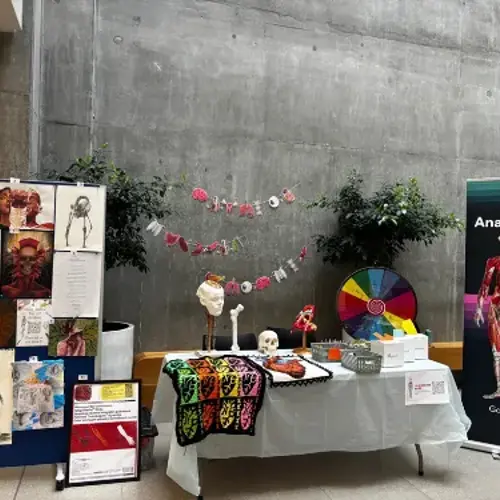
Congratulations to Ms Emily Green, Newcastle University for the event ‘Bits & Bobs: The Anatomy of Sex’. An innovative public engagement event marking World anatomy Day 2026. This event ran on the 15th October 2026 at The Great Northern Museum: Hancock part of Newcastle Please see full report here.
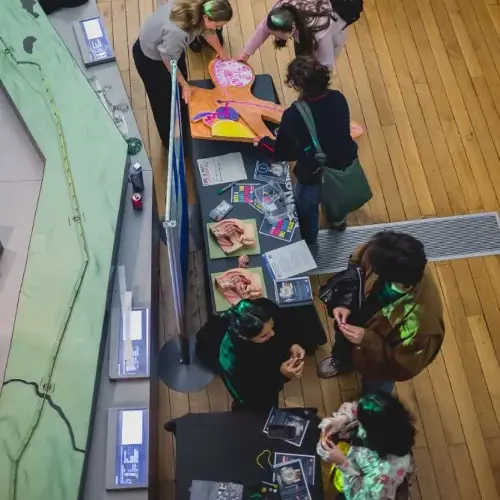
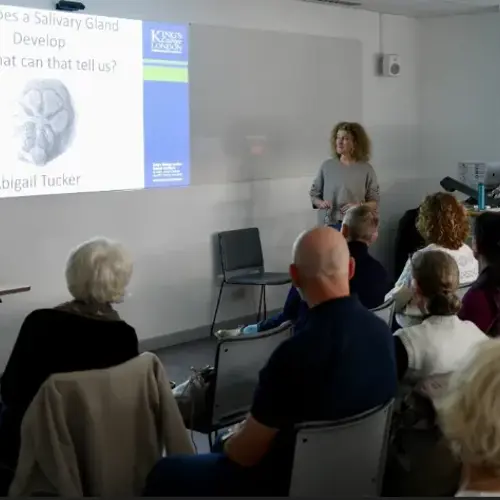
Congratulations to Marta Perera Perez, Guy’s Hospital, King’s College London, for their event ‘Dry Mouth Dialogues’ – A patient / researcher / clinician collaborative workshop which ran on the 17th October 2026. Please see full report here
Deadlines for next round for Receipt of Applications
Award application deadline date for Round 2 of the 2026/2027 award year is on
Support for Student Societies: 04.02.2027
All other awards: 18.02.2027
Undergraduate Summer Vacation Research Scholarships
The Anatomical Society normally offers up to 8 bursaries a year to enthusiastic and eligible undergraduate students to undertake research in the Anatomical Sciences (including Anatomy Education) during a 4 to 10 week period in the summer vacation. It is hoped that this opportunity will encourage students to consider a research career in anatomical science. More information can be found by clicking this link Undergraduate Summer Vacation Research Scholarships
The 2027 round will be opened and published on our website in early 2027. In the meantime, please see project reports from our members on their recent successful applications.
Applicant: Mrs Sharmila Rajendran
Institution: University of Oxford
Student: Ms Ghazal Ershadi-Oskoui
Project Title: Exploring the Responsible Use of AI Platforms to Generate Interactive Neuroanatomy Simulations Through a No-Code Authoring Approach
Project Resume and Project Report
Applicant: Professor Thomas Gillingwater
Institution: University of Edinburgh
Student: Ms Eugenie Johanna Horisberger
Project Title: Uncovering the Role of CCR2+ve Macrophages in a Model of Motor Neuron Disease
Project Resume and Project Report
Applicant: Dr David Kilroy
Institution: University College Dublin, Ireland
Student: Ms Jingran Tao
Project Title: Quantitative CT-based 3D Morphometrics of Cranial Air Sacs in Odontocetes with Equine Comparative Analysis
Project Resume and Project Report
Journal of Anatomy
For a summary of many of the published articles check out @JournalofAnat. As a member of the Anatomical Society you have access to these articles and to the Journal of Anatomy through Wiley Online Library.
Access the journal here.
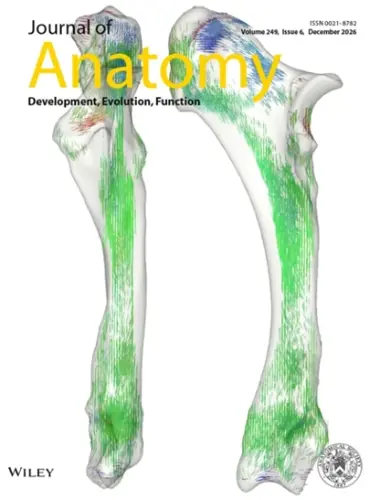
The featured cover image this month is based on the article titled ‘How do forelimb long bones adapt in rhinoceroses? An in-depth examination of their microanatomy’, by C. Etienne
Aging Cell
Aging Cell is a bi-monthly peer-reviewed, open access journal that aims to publish the highest quality, innovative research addressing fundamental issues in the biology of aging. We would like to remind you that our colleagues Aging Cell are now back on X and sharing exciting news and updates on articles from their journal. Please give them a follow @aging_cell
Access the journal here: Aging Cell
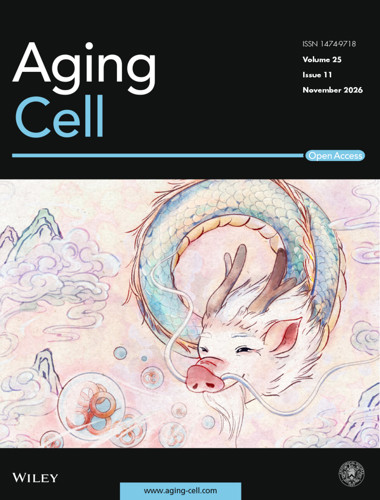
The featured cover image this month is based on the article titled ‘The Senokine Gas6 Promotes Aortic Valve Calcification Through CaMKII–DRP1–Mediated Terminal Scission of Mitochondrial-Derived Vesicles’ by Yaoyu Zhang et al. https://doi.org/10.1111/acel.70758.
Vacancies
Information on current vacancies will appear on this page as and when opportunities arise. https://www.anatsoc.org.uk/research-careers/vacancies/